Now on the App Store

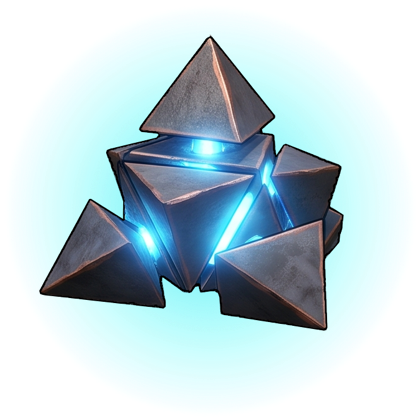
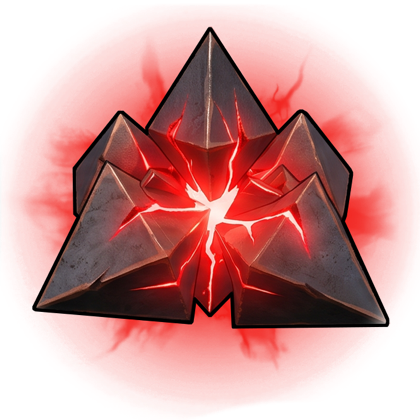
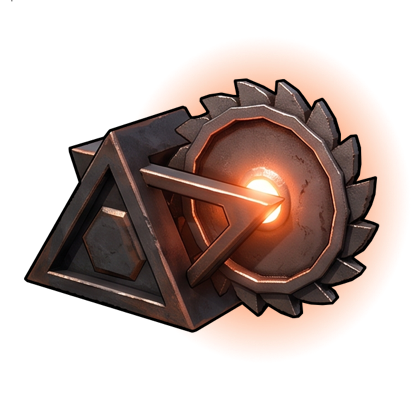
GeoTess is a puzzle game set on an icosahedral geodesic asteroid. Players spin the sphere to place blocks or swap tiles, assembling shapes to earn new mining devices or upgrade existing ones. These devices range from a simple Fuse to a Digger, Drones, a Thrower, and other tools you can activate to clear tiles. You can also aim to assemble a special Fabricator, which produces wild tiles but can only be built at one of the twelve craters, where the game's own geometry breaks.
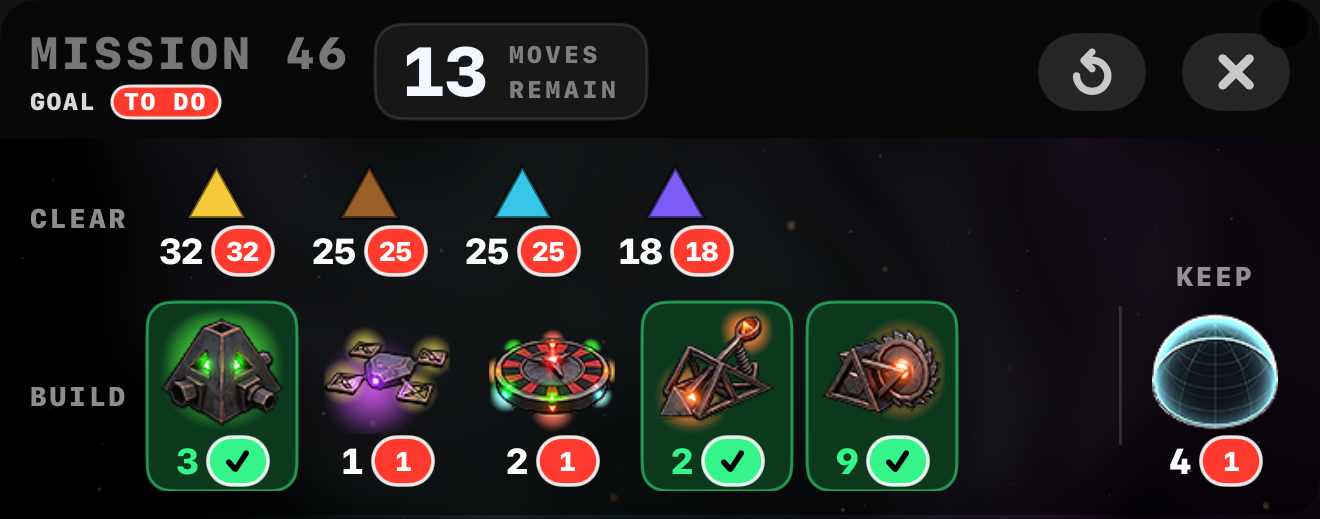
The objectives panel: tiles to clear by color, devices to build, and the moves remaining.

Using or triggering devices is free. Only placing blocks and swapping tiles costs a move, and your goal is to meet mission objectives, such as clearing tiles of specific colors or building certain devices, within a limited number of moves. Success requires balancing device construction with strategic tile clearing. Timing is everything.

Download GeoTess on the App Store Free · no in-app purchases · no ads · no account
Why I built it

I built GeoTess as a challenge to myself: take what the best tile and block games do well, move it onto a completely different geometry, and make the result a brain teaser rather than a game of chance.

Ariel Braunstein · Ariel's Lab
The game's geometry

A board with no edges, and twelve craters nobody chose to put there.

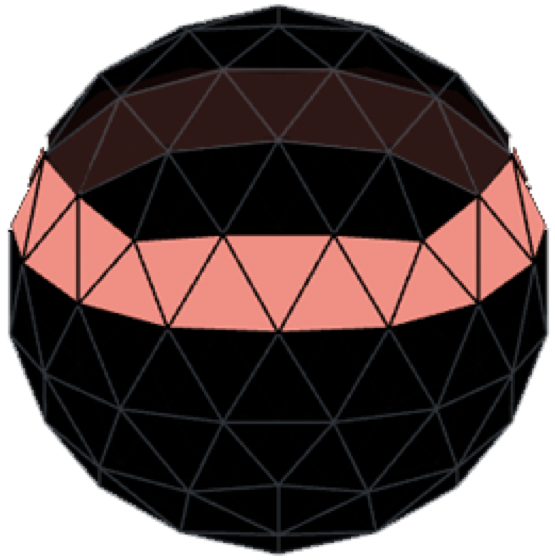
The asteroid is an icosahedral geodesic sphere at frequency 3: 180 triangles, and no corners to get stuck in. Every board game you have played has a border. This one does not, so a shape can run off in any direction and come back.

A row on a flat board is a straight line. Here it is a walk that enters a triangle through one edge and leaves through another, turning alternately left and right, and it never breaks. There are 18 of these bands, each exactly 30 triangles long, and every triangle on the sphere sits on exactly three of them. Send a Digger along one and it grinds the whole way around the asteroid, back to the tile it started on.

Then there are the twelve. On a flat grid of triangles, six meet at every point. On a sphere that is impossible. Euler's formula guarantees that any triangulated sphere has exactly twelve points where only five meet, however finely you divide it. Those twelve are the craters, and they are the only places a Fabricator can be built. The most valuable thing in the game exists because of a constraint that mathematics, not design, put there.

Band 1 Band 2 Band 3 One tile

The real board, built in your browser rather than drawn: an icosahedron cut into 180 triangles and pushed out to a sphere. One tile is picked out in white, and the three bands that run through it are traced in color. Every tile on the sphere has exactly three, and each band closes after thirty triangles.

180
Triangles
18
Closed bands
of 30
3
Bands through
every triangle
12
Craters, always
The devices

Shapes do not clear. They arm.

Form shapes out of a collection of tiles of the same color to build devices, but nothing happens just yet. The shape stays where it is, and the corresponding device appears on top of it. You can upgrade that device by forming a higher-value target shape. Triggering the device is free, so the real question in every mission is how much you build before you spend it to clear tiles.

Fuse

Fuse

3 in a row

The most basic building block. Tap it and it clears its own three tiles and nothing else. Mostly useful as a step on the way to something bigger.

The shape you build
Charge

Charge

4 in a row

A small explosive. It clears itself and every tile that shares a side with it, up to six more, and sets off any device it touches.

The shape you build
Blast

Blast

4-tile triangle

A large explosive. It clears itself and everything adjacent, up to nine more tiles, and starts chain reactions through its neighbors.

The shape you build
Digger

Digger

5 in a row

It has a direction. Set it going and it grinds along its band all the way around the asteroid and back to where it started, clearing up to 25 tiles and triggering whatever it passes.

The shape you build
Its path around the sphere
Thrower

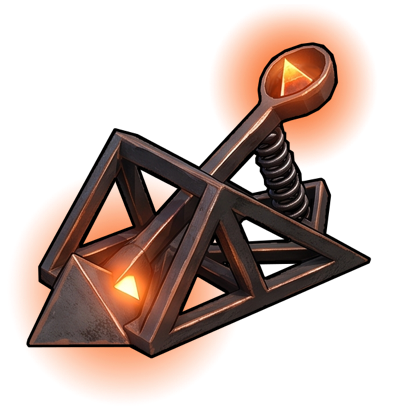
Thrower

6-tile S-shape

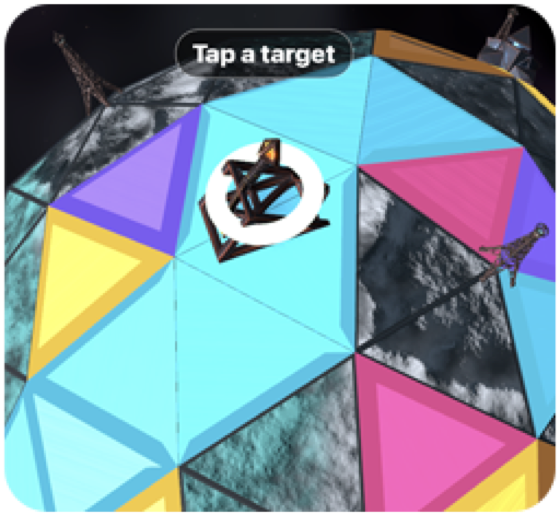
The precise one. Tap it, then tap where you want it, and it lands a Charge exactly there, clearing up to ten tiles around the spot.

The shape you build
Choosing where it lands
Gambit

Gambit

6-tile hourglass

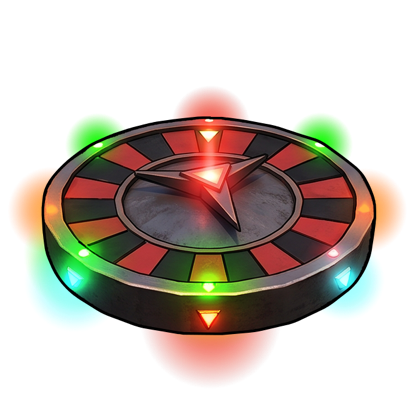
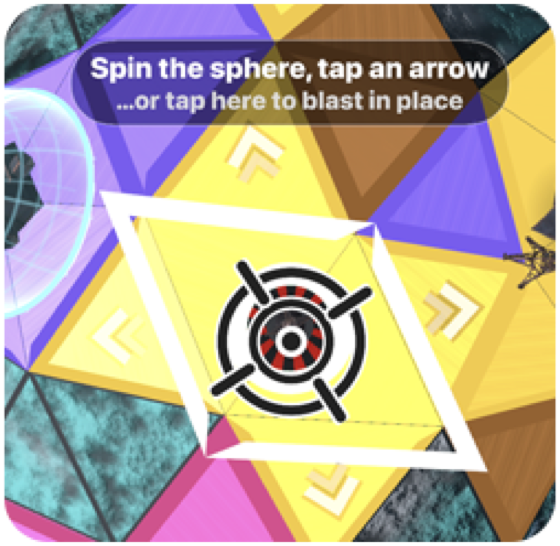
The opposite of the Thrower. Give it a direction or a spin, and wherever it stops takes a Blast, up to 13 tiles. Best used when precision is not the point.

The shape you build
Spin, then wherever it stops
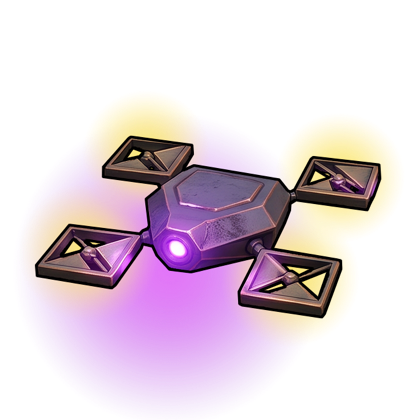
Drones

Drones

6-tile ring

Ten drones fly out across the asteroid and pick off isolated single tiles, the awkward ones left in corners you cannot reach with anything else.

The shape you build
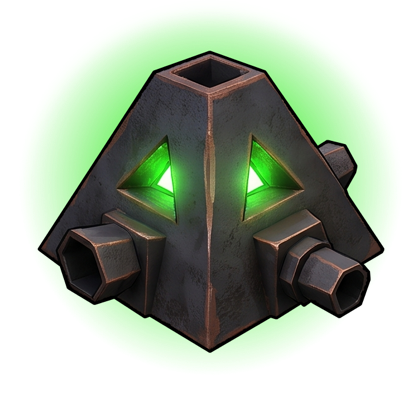
Fabricator

Fabricator

5-tile ring · craters only

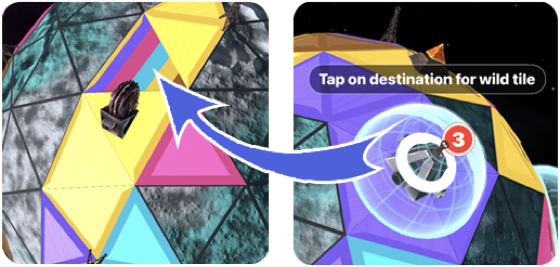
The most valuable device, and the only one you cannot build wherever you like. It forms only in the twelve craters, raises a force field that protects it from every explosion, and produces three wild tiles that count as any color. Spend the third and it goes up too.

The shape you build
Placing a wild tile
Tutorial

One quick tutorial and you are good to go!

The tutorial is a sequence you can re-read at any time, not a gate you have to pass. Every step has its own picture, and the device reference stays available from the toolbar for the mission where you finally ask what a Digger actually does.

Scroll sideways, or drag.
Made to be readable

Five colors, or five shapes.
Accommodating Color Vision Deficiency (CVD).

A puzzle that asks you to gather one color is a puzzle you cannot play if the colors look alike. GeoTess can mark every tile with its own symbol, so the board is readable by shape alone and color becomes a convenience rather than a requirement.

✓A distinct symbol on every tile, switched on in Settings
✓Reduce Motion, which stops debris and flying pieces and fades tiles where they stand
✓Sound effects and volume under your control, and remembered
✓Portrait, one hand, no timers anywhere in the game
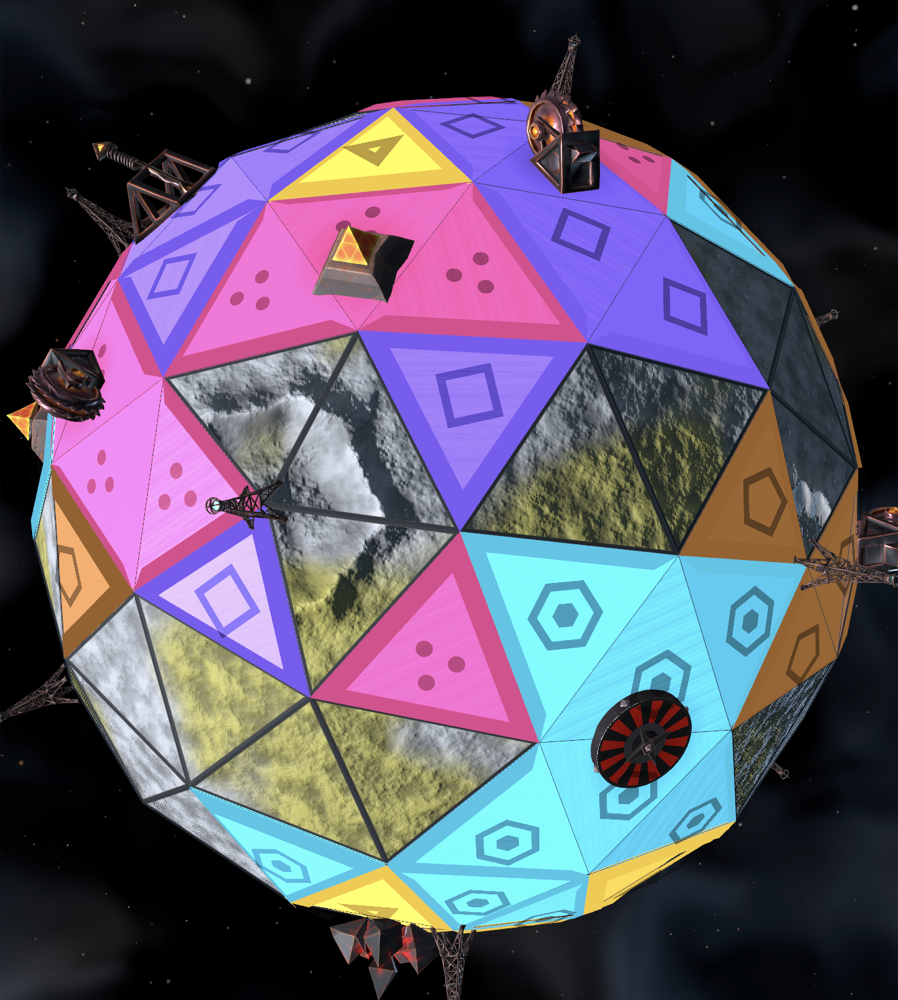
The asteroid with tile symbols switched on: each play color also carries its own
                  mark, so triangles, diamonds, dots, hexagons and pentagons tell the five apart.
Symbols on, on the board itself. Each color also carries its own mark, so the five stay apart when the colors do not.

Now on the App Store.

GeoTess is free, has no in-app purchases, shows no ads, and needs no account. Your progress is kept on your own device and in your own iCloud.

Download GeoTess on the App Store